How to Become a Plumber in 2026: Apprenticeship, License & Timeline

BrazeJobs Team
Published on 10/14/2026
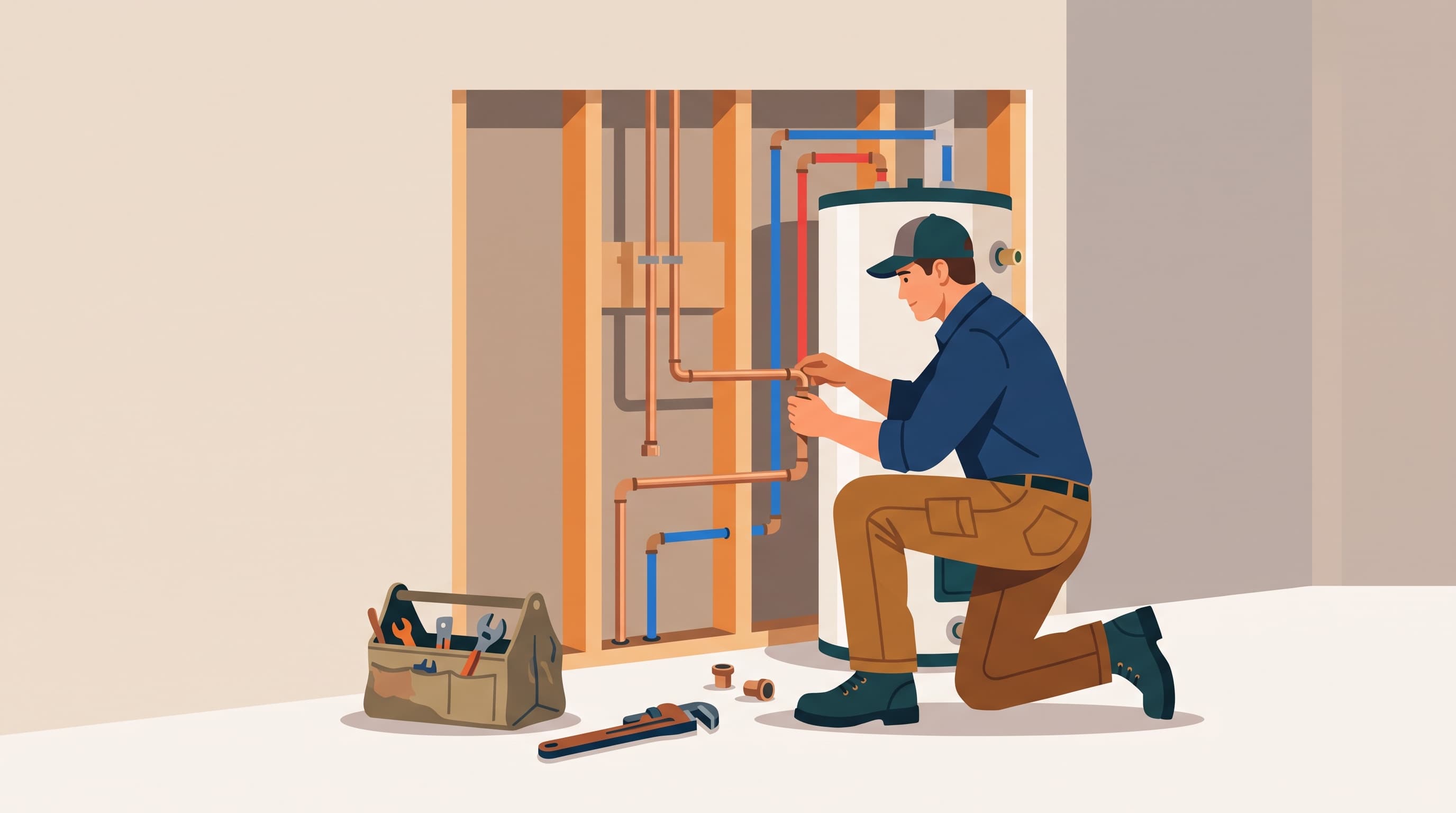
Here's the short version: it takes about four to five years to become a fully licensed journeyman plumber, and most people do it through a paid apprenticeship. You don't need a college degree, you don't need to pay tuition up front, and you earn money the whole time you're learning.
That's the answer. But "four to five years" hides a lot of detail, like how you actually get into an apprenticeship, what the license exam involves, and why some people take longer than others. So let's walk through it.
How long does it take to become a plumber?
For most people, about four to five years from day one to a journeyman license. Here's how that breaks down.
Stage | Typical time | What happens |
|---|---|---|
Getting in | A few weeks to a year | Apply to an apprenticeship or get hired as a helper |
Apprenticeship | 4 to 5 years | Paid work on job sites plus classroom training |
Journeyman license | After the apprenticeship | Prove your hours, pass your state's exam |
Master plumber (optional) | Usually a few more years | More experience, another exam |
The U.S. Bureau of Labor Statistics says most plumbers learn through an apprenticeship lasting four or five years, with about 2,000 hours of paid on-the-job training each year plus technical instruction. That's basically a full-time job, with school layered on top.
Two things can stretch the timeline. The first is getting into an apprenticeship in the first place, since the good ones have application windows and waitlists. The second is how your state counts hours. If you have a slow year or switch employers and lose track of your paperwork, the clock can slow down.
What does a plumber actually do?
Plumbers install and repair the pipes and fixtures that bring clean water into a building and take waste out. That includes water lines, drains, sewer lines, water heaters, toilets, sinks, and in a lot of places, gas lines too.

The job splits into two broad halves:
Service and repair: someone's water heater died, a drain is backed up, a pipe burst. You show up, figure out what's wrong, fix it. Lots of problem solving and lots of talking to homeowners.
New construction: you plumb a building while it's being built, reading blueprints and running pipe before the walls close up. More predictable, more teamwork, less crawling under kitchen sinks.
You'll also choose between residential (houses and apartments) and commercial (offices, hospitals, factories). Commercial work tends to involve bigger systems and often pays more. Residential gets you in the door faster.
Here's the part people underestimate: a huge amount of plumbing is code. Plumbing exists to keep people from getting sick, and the rules for venting, drainage and backflow are there for real reasons. You'll spend years learning them, and the license exam tests them hard.
How do you become a plumber? Step by step
Step 1: Get the basics in order
None of these are hard, but missing one will get you filtered out early.
A high school diploma or GED. BLS says this is typically required, and most apprenticeship programs ask for it.
A driver's license. Most employers require one, since you'll be driving between job sites.
Basic math. Measurements, fractions, angles and some simple algebra for pipe slope and offsets. If you hated math in school, it's a lot easier when the problem is an actual drain line.
Being OK with physical work. Crawlspaces, trenches, tight cabinets and heavy pipe.
If you're still in high school, classes in math, shop, and drafting or blueprint reading will help you later.
Step 2: Get into an apprenticeship
This is the main door into the trade, and it's the step most people get stuck on. There are a few ways in.

Union apprenticeships. In the U.S. and Canada, most union plumbing apprenticeships run through local unions of the United Association (UA). The UA says its apprenticeships typically last five years, with wages and benefits from day one and raises as you progress. They're registered with the U.S. Department of Labor and Canadian authorities. They're also competitive. Expect an application, an aptitude test and an interview, and some locals only take applications at certain times of year. If you're interested, find your local and look up its dates now.
Non-union apprenticeships. These are run by contractor associations, like local chapters of plumbing contractor groups, or by individual companies. The structure is similar: you work, you get paid, and you take classes on the side.
Getting hired as a helper first. Plenty of shops hire plumber's helpers with no experience. You carry material, dig, cut pipe and watch. A good shop will then sponsor you into a formal apprenticeship. A bad shop will keep you digging ditches. In the interview, ask straight up: "Do you sponsor apprentices, and how long until helpers start an apprenticeship?" If they don't have a clear answer, that tells you something.
What about trade school? It's optional. A short pre-apprenticeship or community college plumbing course can make your application stronger and teach you the basics before your first day. But it doesn't replace the apprenticeship, and it doesn't count for much on its own. Be careful with expensive private trade schools. Ask how many graduates actually get into apprenticeships, and ask to see where that number comes from.
Step 3: Do the apprenticeship (and track every hour)
During the apprenticeship, you're working on real jobs under licensed plumbers and taking technical classes. According to BLS, that instruction covers safety, local plumbing codes, blueprint reading, math, applied physics and chemistry. Some programs also require welding courses.
Your pay goes up as you move through the program. You start at a fraction of journeyman pay and get raises at set points.
Here's the most useful tip in this whole guide: keep records of your hours from day one. Keep pay stubs, W-2s, and a simple log of the type of work you did. When you apply for your license, you'll have to prove your experience. Rebuilding four years of work history from memory is miserable, and it's the kind of thing that can delay your license by months.
Step 4: Get your journeyman license
Most states and some cities require plumbers to be licensed. BLS says requirements vary, but they often include two to five years of experience and passing an exam.

The exam usually covers your state's plumbing code, along with things like drainage, venting, water supply and safety. Some states add a practical test. Some states also require a separate license to work on gas lines.
Because the rules really do vary, check your state's plumbing licensing board website before you commit to a path. Look for:
How many hours or years of experience you need
Whether classroom hours count toward the total
What the exam covers and what code book it uses
Whether you need a separate license for gas work
Step 5: Decide if you want to go further
A journeyman license lets you work on your own. Some plumbers stop there and have great careers. Others go on to:
Master plumber. More years of experience plus another exam. In some states, you need master status to get a plumbing contractor's license and run your own business.
Specialties. Things like medical gas, backflow testing, fire sprinklers or pipefitting and steamfitting, which overlap heavily with plumbing.
Running your own shop. This is where the serious money in the trade usually is, along with the paperwork, the insurance and the customers who don't pay on time.
How much do plumbers make?
According to BLS, the median pay for plumbers, pipefitters and steamfitters was $63,800 a year (about $30.67 an hour) in May 2025. The lowest 10% earned less than $44,150, and the highest 10% earned more than $108,420.
Apprentices start well below that median and climb toward it as they progress. The things that push you toward the top are pretty consistent: getting licensed, union jobs in big metro areas, commercial and industrial work, overtime, and eventually owning a business.
For pay by level, see the apprentice plumber, journeyman plumber and master plumber salary pages, or the full BrazeJobs salary guide.
Demand looks solid too. BLS projects employment for plumbers, pipefitters and steamfitters to grow 7% from 2025 to 2035, faster than the average for all jobs, with about 42,000 openings a year. Many of those openings come from people retiring or leaving the trade, which is good news if you're just getting in.
Is it worth it? The honest downsides
We'd be doing you a disservice if we only talked about the good parts. So:

It's dirty work. Sewer lines are exactly what you think they are. You get used to it, but some people never do, and it's better to know that now.
It's hard on your body. Kneeling, crawling, lifting cast iron, working in awkward positions. Knees, back and shoulders take a beating over a career.
The first few years are slow. You'll spend a lot of time carrying stuff and watching before you're trusted with real work. That's normal, but it can feel like nothing is happening.
On-call and emergencies. Pipes like to burst at night, on weekends and on holidays.
Getting in can take time. Good apprenticeships are competitive, and you might not get in on your first try.
And the upside is real. Nobody can outsource fixing a burst pipe in your basement. You earn while you learn instead of taking on student debt. Water and sewer systems aren't going away. And once you're licensed, starting your own business is a real option.
Torn between plumbing and HVAC? They overlap more than you'd think, and some shops do both. Our guide on how to become an HVAC technician walks through that path so you can compare.
A quick note for Canada
In Canada, plumber is a Red Seal trade, and you go through your province's apprenticeship system instead of a state license. The Red Seal program recommends four levels of technical training and 7,200 total hours of training, including both on-the-job and in-school time.
Each province sets its own exact rules. In B.C., for example, apprentices who started Level 1 on or after April 1, 2019 need 6,300 work-based hours plus four levels of school that run seven to eight weeks each. Once you finish, you write the Red Seal exam, which lets you work in other provinces too.
Gas work is usually a separate certification in Canada, so check with your provincial apprenticeship authority for the details.
Quick answers
How long does it take to be a plumber? Usually four to five years to reach journeyman, mostly through a paid apprenticeship. Master plumber takes a few more years on top of that.
How long to become a plumber if you go to trade school first? Not by much. School can help you get accepted into an apprenticeship, but you still need the years of on-the-job experience your state requires. Whether classroom hours count toward that total depends on the state, so check with your licensing board.
Do you need a degree to become a plumber? No. A high school diploma or GED is typically all you need to start.
Do plumbing apprentices get paid? Yes. Apprentices earn wages from the start, with raises as they progress through the program.
Can you become a plumber with no experience? Yes. Apprenticeships and helper jobs are built for people with no experience. Showing up on time and being willing to learn matters more than what you already know.
Is plumbing harder than HVAC? Neither is easy. Plumbing leans more on code and physical work, and HVAC leans more on electrical troubleshooting. Pick the one that sounds more like what you'd want to do every day.
The bottom line
Get your basics in order, get into an apprenticeship (union, non-union, or through a helper job), track every hour, and pass your state's license exam. That's genuinely it. It's not fast, but it's a clear path, you're paid the whole way, and it doesn't start with a pile of student loans.
Ready to start? Browse apprentice and helper jobs on BrazeJobs, see all plumbing jobs, or find HVAC and plumbing jobs near you. You can also browse by state, like Texas or Florida.