How to Become an HVAC Technician: The 2026 Step-by-Step Guide

BrazeJobs Team
Published on 10/12/2026
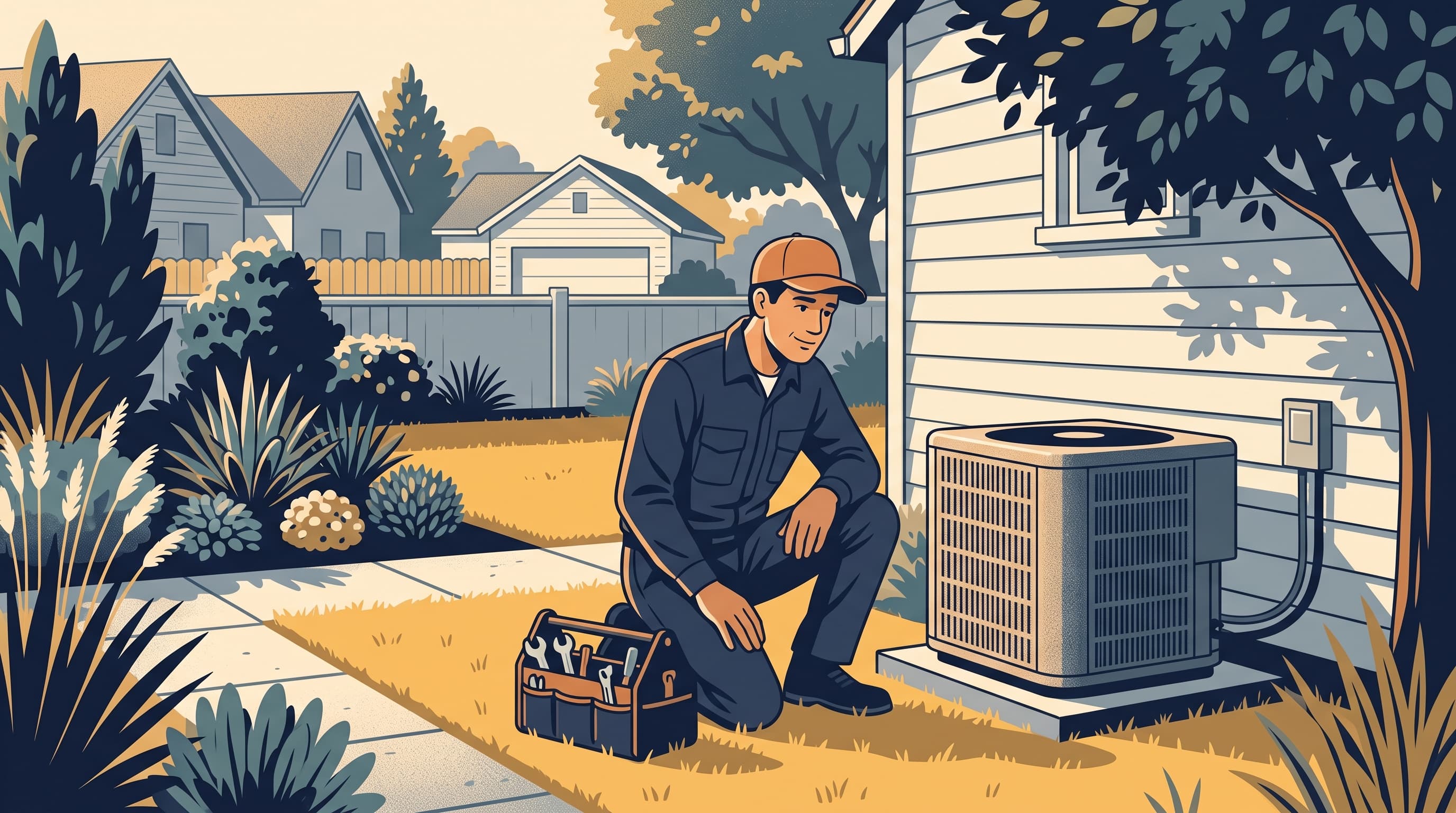
Here's the short version: you can be working in HVAC within a few months, and you can be a fully trained, licensed tech in about two to five years. You don't need a college degree. You do need one federal certification, maybe a state license, and a real tolerance for spending July in attics.
That's honestly the whole answer. But the details matter, because there are three pretty different ways in, and the right one mostly depends on one question: can you afford to go a while without a paycheck? Let's walk through it.
What does an HVAC technician actually do?
HVAC stands for heating, ventilation and air conditioning. You'll also see HVACR, where the R is refrigeration. An HVAC tech installs, maintains and repairs the equipment that keeps buildings warm, cool and breathable: furnaces, heat pumps, central air, ductwork, thermostats, and on the commercial side, rooftop units and walk-in coolers. If you've been searching "how to become a heating and air conditioning specialist," this is the same job with a fancier name.
Here's the part people don't expect. The job is less about turning wrenches and more about figuring things out. A customer calls and says the AC is blowing warm air. That could be low refrigerant, a dead capacitor, a filthy coil, a frozen line, or a thermostat somebody wired wrong in 2009. Your job is to work out which one, fast, while a homeowner watches you.
And a lot of that troubleshooting is electrical. Way more than most people assume. If you really hate the idea of working with electricity, that's worth knowing now rather than six months into a program.
Most techs end up leaning one of two ways:
Install: putting in new systems. More physical, more predictable, more teamwork.
Service: diagnosing and fixing existing systems. More problem solving, more customer contact, usually better pay once you're good at it.
You'll also pick between residential (houses) and commercial (offices, stores, hospitals). Commercial tends to pay more and involves bigger, more complicated equipment. Residential gets you in the door faster.

How long does it take to become an HVAC technician?
It depends on the path, but here's the realistic range.
Path | Time until you're getting paid | Time until you're fully qualified |
|---|---|---|
HVAC school, then a job | After school ends (6 months to 2 years) | Roughly 2 to 5 years total |
Apprenticeship | Right away | Usually 3 to 5 years |
Hired as a helper | Right away | Roughly 3 to 5 years, depends on the shop |
The program lengths come from the U.S. Bureau of Labor Statistics, which says most HVAC certificate and associate programs take six months to two years. The "fully qualified" end is fuzzier, because it depends on your state's license rules and how quickly you pick things up. But nobody becomes a solid independent service tech in six months, no matter what a school ad tells you.
Step 1: Check that you've got the basics
None of these are hard, but you'll get filtered out early without them:
A high school diploma or GED. Most schools and apprenticeship programs ask for one.
A driver's license and a decent driving record. You'll probably drive a company van, and the company's insurance has opinions about your speeding tickets.
Basic math. Fractions, simple algebra, reading a meter. If you hated math in school, don't panic. It's applied math, and it's a lot easier when there's a real furnace in front of you.
Being OK with physical work. Lifting, ladders, crawlspaces, heat, cold.
Step 2: Pick your way in
This is the big decision. There's no single right answer here, just tradeoffs.

Option A: HVAC school (certificate or associate degree)
You go to a community college or trade school, learn the theory, and get hands-on time in a lab. Programs usually run six months to two years.
The good: You learn why things work, not just what to do. Many programs include the EPA 608 exam (more on that below). And employers are more willing to hire someone who already knows what a superheat reading is.
The not so good: It costs money, and you're not earning while you're in class. Prices vary a lot, and community colleges are usually way cheaper than private trade schools. Before you sign anything with a private school, ask what percentage of graduates are working in HVAC six months later, and ask to see where that number comes from.
One honest note: a certificate doesn't make you a technician. Your first year in the field is where you actually learn the job. School just makes that first year less confusing.
Option B: An apprenticeship
You get hired, you get paid, and you do classroom training on the side, usually a few hours a week or a few weeks a year. Apprenticeships typically run three to five years and finish with you at journeyman level.
They come in two main flavors. Union apprenticeships, often through a UA local (the union that covers plumbers, pipefitters and HVAC service techs in a lot of areas), and non-union apprenticeships run by contractor associations or individual companies.
The good: Paid from day one, no student debt, and a clear path to a license at the end.
The not so good: Good apprenticeships are competitive. Union programs usually have an application window, an aptitude test and an interview, and sometimes a waitlist. If you're interested, look up your local's application dates now, because missing one can cost you a year.
Option C: Get hired as a helper and learn on the job
Plenty of shops hire helpers with zero experience, especially right before summer and winter hit. At first you carry equipment, hold the flashlight and watch. Over time you do more.
The good: It's the fastest and cheapest way in. You start earning immediately. And a lot of shops will pay for your schooling or certifications if you stick around.
The not so good: Everything depends on the shop. A good one teaches you. A bad one keeps you hauling condensers forever. In the interview, ask straight up: "What does training look like here, and how long until helpers run their own calls?" If they don't have an answer, that's your answer.
So which one?
If you can afford it, a short, cheap community college program plus your EPA 608 makes landing the first job a lot easier. If you can't afford to go without income, go the helper or apprenticeship route and don't feel bad about it. Five years from now, nobody will care how you started. They'll care whether you can figure out why the heat pump keeps short-cycling.
Step 3: Get your EPA 608 certification
This is the one step that isn't optional. Federal law says anyone who works with refrigerants needs EPA Section 608 certification. Practically every HVAC tech has it.

There are four versions:
Type I: small appliances, like window units and fridges.
Type II: high-pressure systems, which covers most home and light commercial AC and heat pumps.
Type III: low-pressure systems, like big commercial chillers.
Universal: all of the above.
Just get Universal. It's the one employers want, and you only have to study a bit more. The exam is given by an EPA-approved certifying organization, and the core section has to be proctored for Universal. The best part: it never expires. Pass it once and you're done.
What about other certifications? NATE certification is voluntary, and some employers like it and may pay a bit more for it. But it's aimed at people who already have field experience, so don't stress about it before you've had your first job. Manufacturer training comes later too, usually paid for by your employer.
Step 4: Get licensed, if your state requires it
This is where it gets messy, because it varies a lot by state. Some states license HVAC techs at the state level, often with levels like apprentice, journeyman and master. Some leave licensing up to cities or counties. Some mainly license contractors, meaning the people who run the business, not every tech on the truck.
Where a license exists, the usual pattern is: a few years of documented work under a licensed person, then an exam.
So here's the most useful tip in this whole guide: start tracking your hours from day one. Keep pay stubs, W-2s and a simple log of what kind of work you did. When it's time to apply for a license, you'll need to prove your experience, and trying to rebuild three years of work history from memory is miserable.
Check your state's licensing board website before you commit to a path, so you know exactly what you're working toward.
Step 5: Land your first HVAC job
Timing matters in this trade. Shops hire ahead of the busy seasons, so late winter into spring (before AC season) and late summer into fall (before heating season) are good times to apply.
For an entry-level job, most employers want to see:
A valid driver's license
EPA 608, or a plan to get it soon
Basic hand tools (the company usually supplies the expensive stuff)
Evidence that you show up on time and can learn
That last one sounds obvious, but it's genuinely what a lot of shop owners care about most. They can teach you refrigeration. They can't teach you to show up.
When you're ready to look, start with entry-level and apprentice HVAC jobs on BrazeJobs, browse all HVAC jobs, or see HVAC and plumbing jobs near you. You can also browse by state, like Texas or Florida.
How much do HVAC technicians make?
According to the BLS, the median HVAC technician made $61,010 a year (about $29.33 an hour) in May 2025. The bottom 10% made under $40,050, and the top 10% made over $95,210.
Starting out, expect to be near the bottom of that range, and apprentices and helpers usually start lower than that. The things that push you toward the top are pretty consistent: moving into commercial or refrigeration work, getting licensed, union jobs in big metro areas, and overtime. HVAC has a lot of overtime in peak season, whether you want it or not.
For pay by state, check the BrazeJobs salary guide.
The demand side looks good too. The BLS projects HVAC jobs to grow 11% from 2025 to 2035, much faster than average, with about 40,600 openings a year. A lot of those openings come from people retiring or leaving the trade, which is good news if you're just getting in.
Is it actually worth it? The honest downsides
We'd be doing you a disservice if we only talked about the good stuff. So:

Attics in summer are brutal. It gets way hotter up there than it is outside. You'll also do crawlspaces, rooftops in January and mechanical rooms that haven't been cleaned since the building went up.
The hours swing with the weather. A heat wave can mean 60-hour weeks. A mild spring can mean fewer hours than you'd like.
On-call is common. Furnaces love to die at 2 a.m. on a holiday.
It's hard on your body over time. Knees, back, shoulders. The techs who last take care of themselves and eventually move into service, training, sales or running a shop.
And the upside is real. You can't outsource fixing someone's furnace to another country. You can earn while you learn instead of taking on debt. And once you're experienced and licensed, starting your own business is a real option, which is where the serious money in this trade is.
A quick note for Canada
If you're in Canada, the path is a bit different. The trade is usually called refrigeration and air conditioning mechanic, it's a Red Seal trade, and you go through a provincial apprenticeship system. Instead of EPA 608, you'll need your province's ozone-depleting substances certification, and gas work like furnaces usually needs a separate gas fitter license. Check with your provincial apprenticeship authority for the details.
Quick answers
How long does it take to become an HVAC tech? You can start working in weeks as a helper, or after six months to two years of school. Becoming fully qualified usually takes two to five years total.
Do you need a degree? No. A certificate or associate degree helps, but plenty of techs started as helpers or apprentices with just a high school diploma.
Can you become an HVAC tech with no experience? Yes. Helper and apprentice jobs are designed for people with no experience. Getting your EPA 608 first will make you stand out.
Is HVAC hard to learn? The basics, not really. Getting really good at diagnosing problems takes years, and that's exactly why experienced service techs get paid well.
The bottom line
Get your basics in order, pick the path you can actually afford, get your EPA 608, track your hours, and find a shop that will teach you. That's genuinely it. It's not a fast path, but it's a clear one, and it doesn't start with $80,000 of student loans.
Ready to start? Browse HVAC apprentice and entry-level jobs on BrazeJobs.